Little Romeo: Graphics for Freebies and Sales
When you run a digital shop, every asset you download is an investment of time. I have spent years building libraries for Etsy listings, print-on-demand catalogs, and client projects. Recently, I came across Little Romeo, a design asset that caught my eye not because it was flashy, but because it felt versatile. As someone who values efficiency and commercial viability, I wanted to see if this piece could hold up in a real-world selling environment. This review breaks down how Little Romeo performs when tested against the demands of modern creative marketplaces.
The first impression of Little Romeo is one of approachable charm. It does not scream for attention with aggressive boldness, nor does it fade into the background with excessive minimalism. Instead, it strikes a balance that feels both playful and polished. For sellers targeting the nursery decor niche, greeting card markets, or boutique apparel, this visual personality is gold. It appeals to buyers looking for something handmade and heartfelt without sacrificing professional quality. The mood is warm, suggesting it would pair beautifully with pastel palettes or earthy tones, making it a strong candidate for seasonal bundles or evergreen collections.
Technical Breakdown and File Versatility
Before integrating any graphic into a product line, I check the file structure. A messy zip file is a red flag for customer support issues later. With Little Romeo, the delivery is straightforward and professional. You receive a compressed folder containing three essential formats, each serving a distinct purpose in the production workflow.
- AI File: This is crucial for deep customization. If you need to adjust anchor points or modify the color profile to match a specific brand identity, the Adobe Illustrator source file gives you full control.
- EPS File: This ensures compatibility beyond the Adobe ecosystem. Whether your customers use Inkscape, Corel Draw, or older versions of vector software, this format guarantees the design remains scalable and editable.
- SVG File: This is the workhorse for cutting machines. For Cricut and Silhouette users, a clean SVG is non-negotiable. It allows for precise cutting paths, which is vital for sticker designs, vinyl decals, and iron-on transfers.
Having these three formats means Little Romeo is not just a static image; it is a flexible graphic design asset ready for various production methods. From sublimation printing on mugs to vector-based logo integration, the technical foundation is solid.
Real-World Product Applications
The true test of any digital product is its adaptability. I simulated several product launches to see where Little Romeo added value. Here is how it performed across different categories:
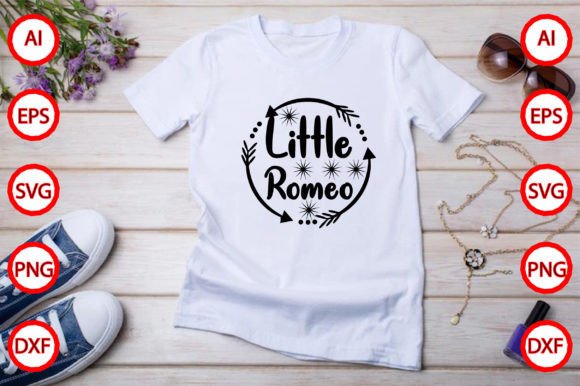
- Print-on-Demand Apparel: I placed the design on a t-shirt mockup. Because the lines are clean, it printed well on both light and dark fabrics, provided I adjusted the color contrast. It works exceptionally well as a chest pocket design or a central graphic for children’s clothing.
- Digital Downloads and Printables: For planners and journaling kits, Little Romeo serves as an excellent decorative element. It breaks up text blocks without overwhelming the page. I used it in a printable wall art set, pairing it with a handwritten font to create a cohesive look.
- Cricut Projects and Stickers: The SVG file imported smoothly into design software. The cut lines were accurate, requiring minimal cleanup. This makes it ideal for creating sticker sheets or custom labels for handmade goods.
- Canva Templates: Many sellers create templates for other entrepreneurs. By converting the AI or EPS file to a PNG with a transparent background, I integrated Little Romeo into social media graphics and invitation templates. It added a unique touch that generic clipart often lacks.
This versatility confirms that Little Romeo is more than just a single-use illustration. It is a core component for building a diverse design bundle or enhancing individual listings.
Enhancing Product Presentation
In the crowded space of online selling, thumbnail appeal drives clicks. I found that Little Romeo helps establish visual hierarchy in product mockups. When used in listing images, it draws the eye without distracting from the main product message. For example, in a mockup for a mug design, placing Little Romeo prominently helped convey the whimsical nature of the item instantly.
Furthermore, consistency builds trust. Using the same asset across a seasonal collection—such as a back-to-school bundle or a holiday greeting card set—creates a recognizable brand identity. Customers begin to associate that specific style with your shop. This is particularly useful for small business branding, where every visual cue contributes to perceived value.
Strategic Placement and Cautionary Notes
While Little Romeo is robust, it is not a magic bullet for every design scenario. Knowing where to use it—and where to avoid it—is key to maintaining professional standards.
Where it shines: Use it for large product previews where details are visible. It excels in themed bundles, decorative layouts, and merchandise graphics where the design can breathe. It is also effective for social media promos, where a friendly, engaging visual can increase engagement rates.
Where to be careful: Avoid using it for tiny sticker details if the original complexity is high, as fine lines may get lost during cutting or printing. Be cautious with overly complex layouts; if you crowd Little Romeo with too much text or other elements, it loses its impact. Additionally, always check contrast on dark backgrounds. While the vector files allow color changes, ensure the chosen hue stands out against the substrate, especially for t-shirt designs or tote bag prints.
Practical Seller Tips for Implementation
To get the most out of this asset, follow these practical steps before publishing your listings:
- Test on Real Mockups: Do not rely solely on digital proofs. Print a sample on the intended material, whether it is vinyl, paper, or fabric, to check color accuracy and line integrity.
- Verify Transparency: If using PNGs, ensure the background is truly transparent. A white halo around the design can look unprofessional on colored products.
- Font Pairing: Experiment with typography. Little Romeo pairs well with serif fonts for a classic look, sans serif fonts for modern clarity, or script fonts for a personal touch. Avoid display fonts that compete with the graphic for attention.
- Check Licensing: Always confirm the commercial license terms. Ensure you understand the limits of use for sellable products, especially if you are modifying the original design significantly.
- Organize for Customers: If you are reselling this as part of a bundle, organize the files clearly. Label folders by format (AI, EPS, SVG) to reduce customer confusion and support queries.
In conclusion, Little Romeo is a valuable addition to any digital creator’s toolkit. It offers the flexibility needed for diverse product creation, from Cricut projects to Canva templates. By understanding its strengths and limitations, you can leverage this graphic to enhance your shop’s aesthetic and drive sales. It is a practical, high-quality asset that supports the professional presentation required in today’s competitive creative marketplace.